



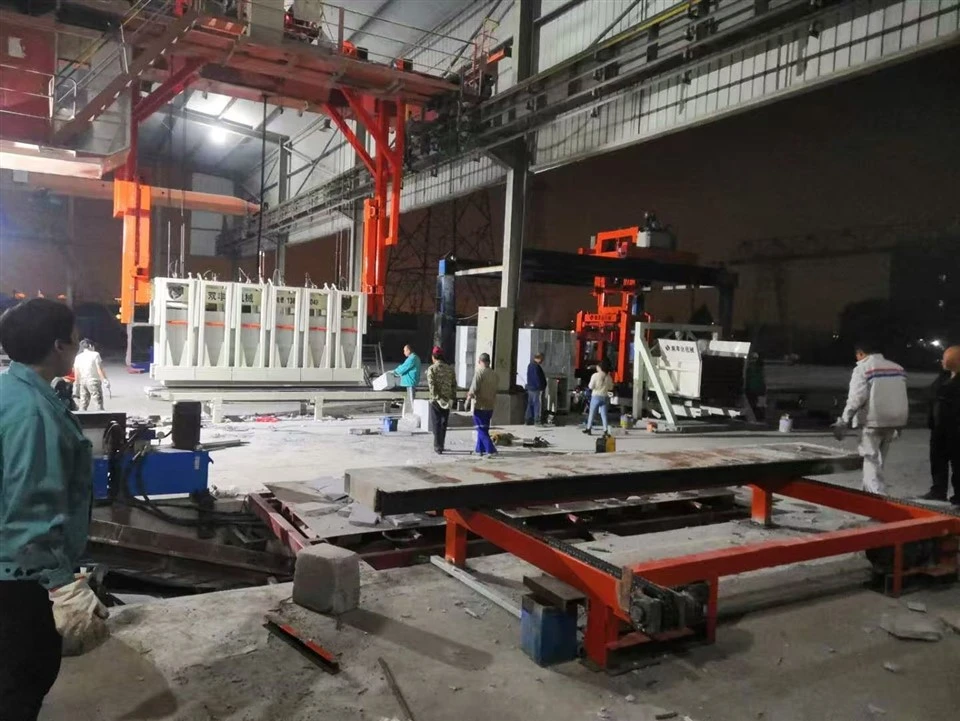
Pallet-operated Baling Conveyor Line
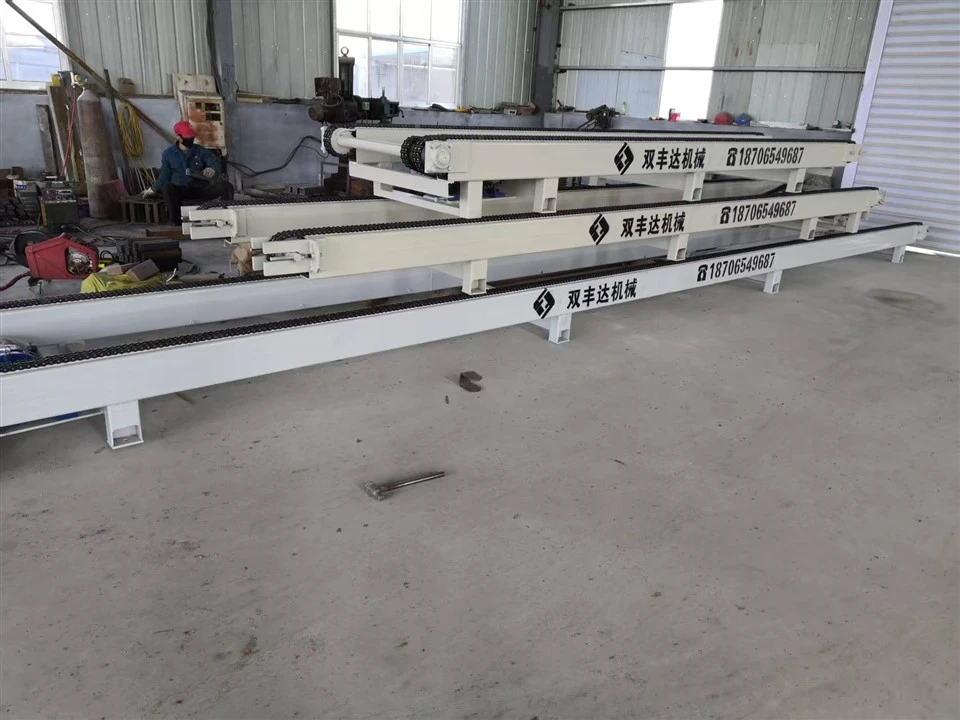
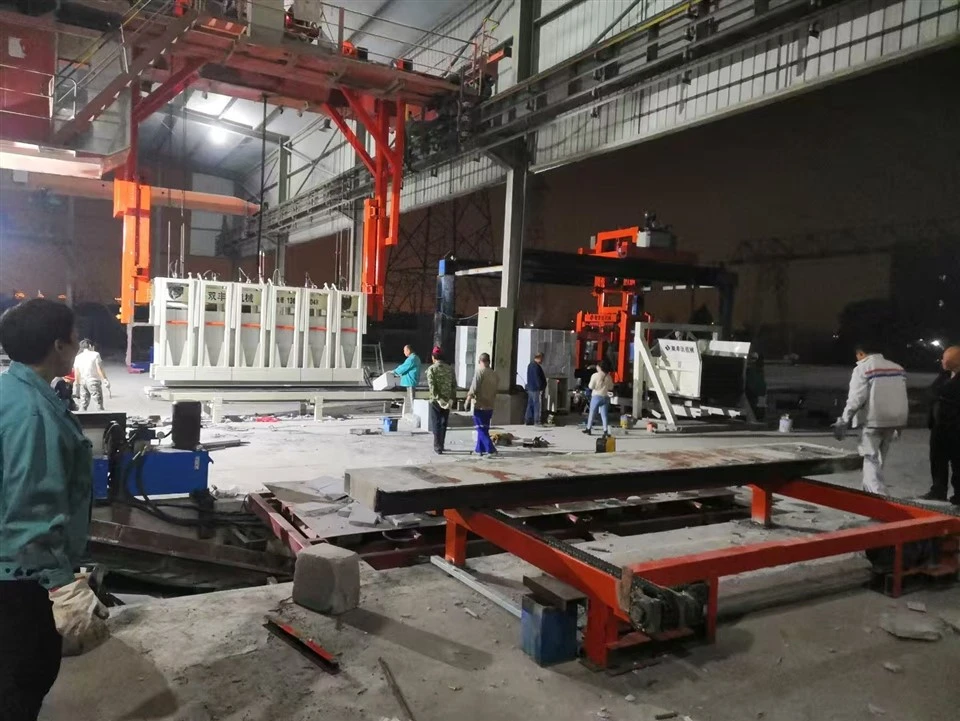
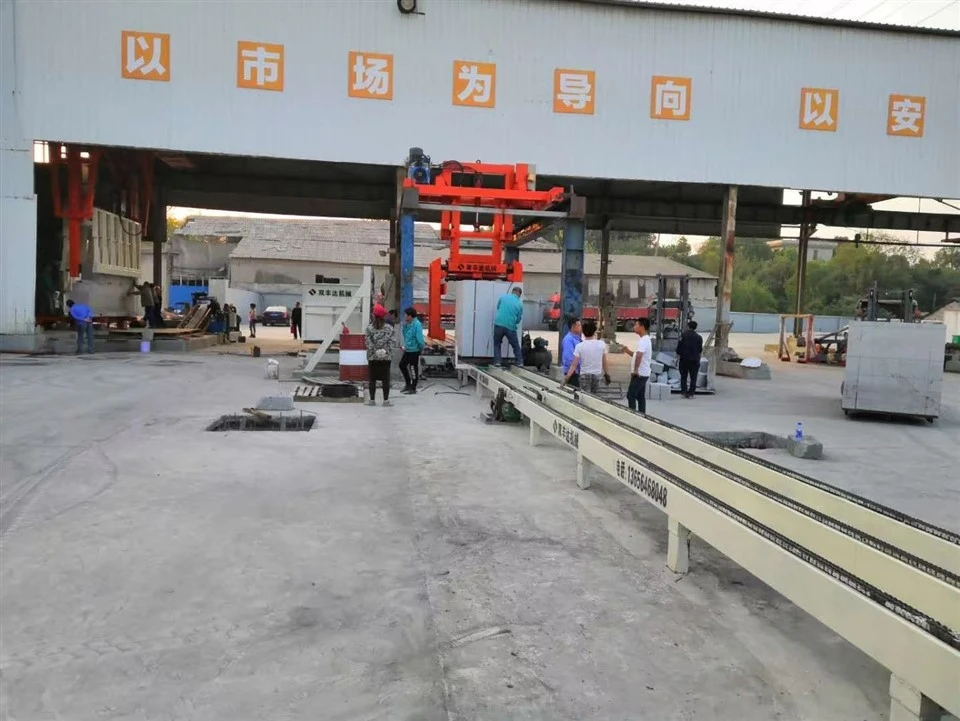
The palletized packaging conveyor line for finished aerated concrete blocks is an important component of the packaging section in the aerated concrete block production line. It is mainly used to carry, transport and package the steamed and cured blocks on pallets, realizing the automation of the production process, improving production efficiency and product quality. Here is the relevant introduction:
Main components:
-Tray distribution machine: responsible for automatically distributing empty trays to the conveyor line, preparing for receiving blocks.
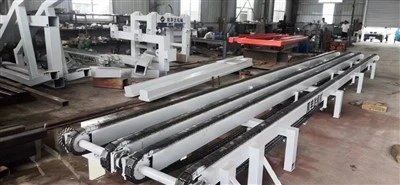
-Chain conveyor: As the core conveying equipment, it uses chains as traction components to continuously and smoothly transport pallets and their blocks along a predetermined route to the packaging area. It has the advantages of large conveying capacity, long distance, and smooth operation.
-Guiding device: installed on both sides of the conveyor line, used to ensure that the pallet maintains the correct direction and position during the conveying process, preventing deviation or tipping.
-Sensors and Control System: Real time monitoring of the position and status of trays and blocks is achieved through sensors installed on the conveyor line, and the information is fed back to the control system. The control system adjusts the speed and position of the conveyor based on the feedback to ensure safe a
-Working principle: After the autoclaved aerated concrete blocks are transported out of the autoclave by the steam curing vehicle, they are lifted onto an empty pallet by a semi-finished lifting device. The pallet dispenser automatically distributes new empty pallets onto the conveyor line, and the chain conveyor starts to smoothly transport the pallets carrying blocks along the conveyor line to the packaging area. During this process, the guiding device plays a role to ensure that the direction and position of the pallets are correct. Sensors monitor and provide real-time feedback, and the control system adjusts the conveying process accordingly. After the pallet arrives at the packaging area, the packaging equipment packages the blocks, and then the conveyor continues to transport the next pallet carrying the blocks, forming a continuous production process.
Main technical parameters
1. Model size: 6m/9m/16m/19m, etc. can be customized as needed
2. Mass: 2600 kilograms
3. Power: 3Kw-6 Kw
4. Operating speed: 5-15m/min, variable frequency adjustable
Common faults and their solutions;
Chain related faults
Chain stuck or jammed
-Reason for malfunction: There is a foreign object stuck on the chain; Chain deformation, severe wear, or increased pitch; Wear, breakage or misalignment of sprocket teeth.
-Solution: After shutting down the machine and cutting off the power, clean the foreign objects between the chain and sprocket; Check the chain and replace it if it is deformed or worn beyond the tolerance range; Replace the worn or broken sprocket and adjust its position to align it.
Chain detachment
-Reason for malfunction: The sprocket is not installed correctly; Excessive slack in the chain; The wear of the chain leads to uneven pitch.
-Solution: Adjust the sprocket again to ensure its axis is parallel and aligned; Adjust the tensioning device to tighten the chain to the appropriate level; Replace the severely worn chain.
Abnormal noise from the chain
-Reason for malfunction: Insufficient lubrication of the chain; Poor meshing between sprocket and chain; Chain or sprocket wear.
-Solution: Add appropriate lubricating oil to the chain to ensure proper lubrication; Check the sprocket and chain, adjust the meshing clearance or replace worn parts.
Conveyor line malfunction
1. Unstable conveying speed
-Fault cause: Unstable speed of the drive motor; Improper setting of frequency converter parameters; The transmission belt or gear is worn and slipping.
-Solution: Check the motor power supply voltage and load condition, and repair or replace the motor if necessary; Reset the parameters of the frequency converter to meet operational requirements; Replace worn drive belts or gears.
2. Material deviation during transportation
-Reason for malfunction: Inconsistent tension of the chains on both sides of the conveyor line; The installation of rollers or guide rails is not parallel; The placement position of the conveyed material is offset.
-Solution: Adjust the tension devices on both sides of the chain to ensure consistent tension; Correct the rollers or guide rails to ensure their parallelism; Standardize the placement of the conveyed material and place it in the center.
Drive system malfunction
The motor does not start
-Reason for malfunction: The power supply is not connected or the power supply voltage is abnormal; Loose or poor contact of motor wiring; Motor overload, thermal relay action; Motor malfunction itself (such as burnt windings).
-Solution: Check the power supply to ensure it is connected and the voltage is normal; Tighten the motor wiring to ensure good contact; Identify the cause of overload and reset the thermal relay; If the motor winding burns out, the motor needs to be repaired or replaced.
The motor is overheating severely
-Reason for malfunction: Excessive motor load; Poor ventilation of the motor and blocked heat dissipation fins; Motor bearings are damaged; Motor winding short circuit.
-Solution: Reduce the load on the motor and check if the conveyor line is stuck or not; Clean the motor heat sink to ensure good ventilation; Replace damaged motor bearings; If the winding is short circuited, the motor winding needs to be repaired or the motor needs to be replaced.
Tensioning device malfunction
1. Failure of tensioning device
-Reason for malfunction: The tension spring is broken or has insufficient elasticity; The tensioning screw is stuck or damaged; The tensioning slider is severely worn.
-Solution: Replace the tension spring that is broken or has insufficient elasticity; Repair or replace jammed or damaged tensioning screws; Replace the severely worn tensioning slider.
Hot Tags: pallet-operated baling conveyor line, China pallet-operated baling conveyor line manufacturers, suppliers, factory
You Might Also Like
Send Inquiry