


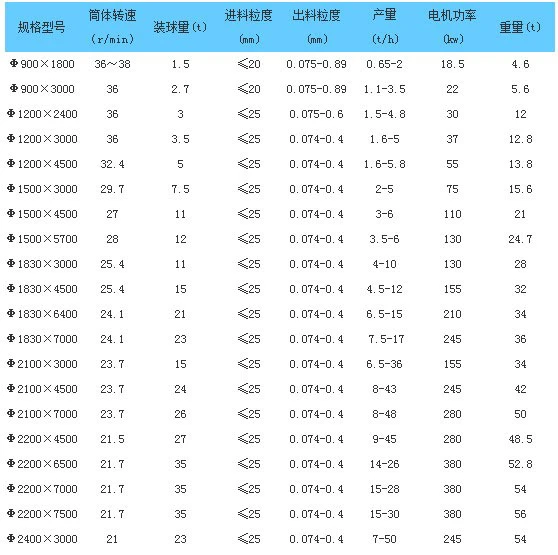
Attritor Ball Mill
The ball mill used in the production line of aerated blocks is a horizontal cylindrical rotating device, with external gear transmission, two compartments, and a grid type ball mill.
Gas block equipment ball mill is a key equipment in the raw material processing of gas block production lines. Gas block ball mills are widely used in the production industries of cement, silicate products, new building materials, refractory materials, fertilizers, black and non-ferrous metal beneficiation, and glass ceramics. They perform dry or wet grinding on various ores and other grindable materials.

There is a circular cylinder with end caps with hollow shaft necks at both ends. The shaft necks of the end caps are supported on bearings, and the electric motor rotates the ball mill through gears installed on the cylinder. The cylinder contains grinding medium (steel balls, steel bars, gravel, etc.) and the ground ore, with a total loading amount of 25-45% of the effective volume of the cylinder. When the cylinder rotates around the horizontal axis at the prescribed speed, the grinding medium and ore inside the cylinder are lifted to a certain height by the cylinder lining plate under the action of centrifugal force and friction force, and then freely fall or throw off from the cylinder wall, causing the ore to be crushed by impact and grinding. The ore is continuously fed into the hollow shaft neck at one end of the cylinder, while the ground product is continuously discharged through the hollow shaft neck at the other end of the cylinder. The movement of the ore inside the cylinder is achieved by using the pressure continuously fed into the ore. During wet grinding, the ore is carried away by the water flow. During dry grinding, the ore is carried away by the airflow extracted from the outside of the cylinder.
Structural characteristics of gas block ball mill
This gas block ball mill consists of main parts such as feeding section, discharging section, rotating section, and transmission section (reducer, small transmission gear, motor, electric control). The hollow shaft is made of cast steel and the inner lining can be replaced. The rotating large gear is processed by casting gear hobbing, and the cylinder body is embedded with wear-resistant lining plate, which has good wear resistance. The machine runs smoothly and reliably.
The ball mill used in the production line of aerated blocks is a horizontal cylindrical rotating device, with external gear transmission, two compartments, and a grid type ball mill.
Gas block equipment ball mill is a key equipment in the raw material processing of gas block production lines. Gas block ball mills are widely used in the production industries of cement, silicate products, new building materials, refractory materials, fertilizers, black and non-ferrous metal beneficiation, and glass ceramics. They perform dry or wet grinding on various ores and other grindable materials.
Working principle of ball mill
There is a circular cylinder with end caps with hollow shaft necks at both ends. The shaft necks of the end caps are supported on bearings, and the electric motor rotates the ball mill through gears installed on the cylinder. The cylinder contains grinding medium (steel balls, steel bars, gravel, etc.) and the ground ore, with a total loading amount of 25-45% of the effective volume of the cylinder. When the cylinder rotates around the horizontal axis at the prescribed speed, the grinding medium and ore inside the cylinder are lifted to a certain height by the cylinder lining plate under the action of centrifugal force and friction force, and then freely fall or throw off from the cylinder wall, causing the ore to be crushed by impact and grinding. The ore is continuously fed into the hollow shaft neck at one end of the cylinder, while the ground product is continuously discharged through the hollow shaft neck at the other end of the cylinder. The movement of the ore inside the cylinder is achieved by using the pressure continuously fed into the ore. During wet grinding, the ore is carried away by the water flow. During dry grinding, the ore is carried away by the airflow extracted from the outside of the cylinder.
Structural characteristics of gas block ball mill
This gas block ball mill consists of main parts such as feeding section, discharging section, rotating section, and transmission section (reducer, small transmission gear, motor, electric control). The hollow shaft is made of cast steel and the inner lining can be replaced. The rotating large gear is processed by casting gear hobbing, and the cylinder body is embedded with wear-resistant lining plate, which has good wear resistance. The machine runs smoothly and reliably.
Common faults and troubleshooting methods of ball mill
The ball mill is the core equipment for ore grinding and material crushing. Common faults are concentrated in abnormal operation, discharge problems, component damage, etc. The following are specific faults, causes, and corresponding troubleshooting methods:
Intense vibration during operation
Common reasons:
1. Loose or broken anchor bolts result in unstable equipment fixation.
2. Uneven loading of grinding bodies (steel balls, steel sections), or severe wear of some grinding bodies and imbalanced size ratios.
3. The feed particles are too large and exceed the processing range of the equipment, causing blockage or excessive impact at the feed inlet.
4. Bearing wear or installation deviation leads to unstable operation of the shaft system.
Exclusion method:
1. Stop the machine and check the foundation bolts, tighten loose bolts, replace broken bolts, and re level the equipment.
2. Adjust the loading capacity of the grinding body, supplement or replace severely worn grinding bodies, and match different specifications of grinding bodies in proportion.
3. Control the feed particle size to ensure compliance with equipment requirements, and clean up blockages at the feed inlet.
4. Check the bearing clearance, replace worn bearings, and recalibrate the installation accuracy of the shaft system.
The particle size of the discharged material does not meet the requirements (too coarse or too fine)
Common reasons:
1. Unreasonable grading of grinding materials, such as excessive large diameter grinding materials (resulting in coarse discharge) or excessive small diameter grinding materials (resulting in fine discharge).
2. Insufficient loading capacity of grinding body and insufficient grinding ability (coarse discharge); Or excessive loading capacity, excessive grinding (fine discharge).
3. The feeding amount is too large, and the material stays in the cylinder for a short time (coarse discharge); The feeding amount is too small and the grinding time is too long (resulting in fine discharge).
4. The lining plate is severely worn, and the grinding efficiency decreases (resulting in coarse discharge).
Exclusion method:
1. Adjust the grading of the grinding material and match the proportion of grinding materials with different diameters according to the process requirements.
2. Increase or decrease the loading capacity of the grinding body to meet the rated range and production requirements of the equipment.
3. Stabilize the feed rate and control the amount of material entering by adjusting the speed of the feeder and other methods.
4. Check the wear of the lining plate and replace the severely worn lining plate.
The bearing temperature is too high
Common reasons:
1. Insufficient, deteriorated or mismatched lubricating grease leads to lubrication failure.
2. The bearing installation is too tight, the clearance is too small, and friction intensifies during operation.
3. Dust and impurities enter the bearing, causing wear and frictional heating.
4. The shaft is bent or the coupling is misaligned, resulting in uneven bearing force on the shaft.
Exclusion method:
1. After stopping the machine, clean the inside of the bearing and add an appropriate amount of new lubricating grease that matches the model.
2. Recheck the bearing installation clearance and adjust it to the standard range.
3. Check the sealing device, replace damaged sealing rings, and prevent impurities from entering.
4. Correct the bent shaft and readjust the coaxiality of the coupling.
Abnormal noise in the transmission system
Common reasons:
1. Severe gear wear, scratches or broken teeth on the tooth surface, and abnormal noise during meshing.
2. The coupling connection is loose or the rubber pad is aged or damaged, resulting in vibration and noise during operation.
3. The misalignment of the motor and reducer shaft system results in poor transmission.
four Insufficient or deteriorated lubricating oil in the reducer, and poor lubrication of the gears.
Exclusion method:
1. Check the wear of the gears. Minor wear can be repaired by grinding, and if severe, the gears need to be replaced.
2. Tighten the coupling bolts and replace aged or damaged rubber pads.
3. Re calibrate the coaxiality of the shaft system between the motor and the reducer.
4. Supplement or replace the lubricating oil in the reducer to ensure that the oil level and quality meet the requirements.
Blockage at the inlet or outlet
Common reasons:
1. The feeding speed is too fast, and the material accumulates at the feeding port; Or the material has high humidity and clumps or blockages.
2. The angle of the discharge pipe is unreasonable, the pipe diameter is too small, or there is residual material accumulation inside the pipe.
3. The grinding material is broken, the lining plate falls off, and it gets stuck at the discharge port.
Exclusion method:
1. Reduce the feeding speed, preprocess materials with excessive humidity (such as drying), and clean up the accumulation at the feeding port.
2. Adjust the angle of the discharge pipe or replace the large-diameter pipe, and clean the residual material inside the pipe.
3. After stopping the machine, check the condition inside the cylinder, remove the broken grinding material or detached lining plate, and repair the lining plate fixing device.
Hot Tags: attritor ball mill, China attritor ball mill manufacturers, suppliers, factory
Previous
Wam Bucket ElevatorNext
No InformationYou Might Also Like
Send Inquiry